
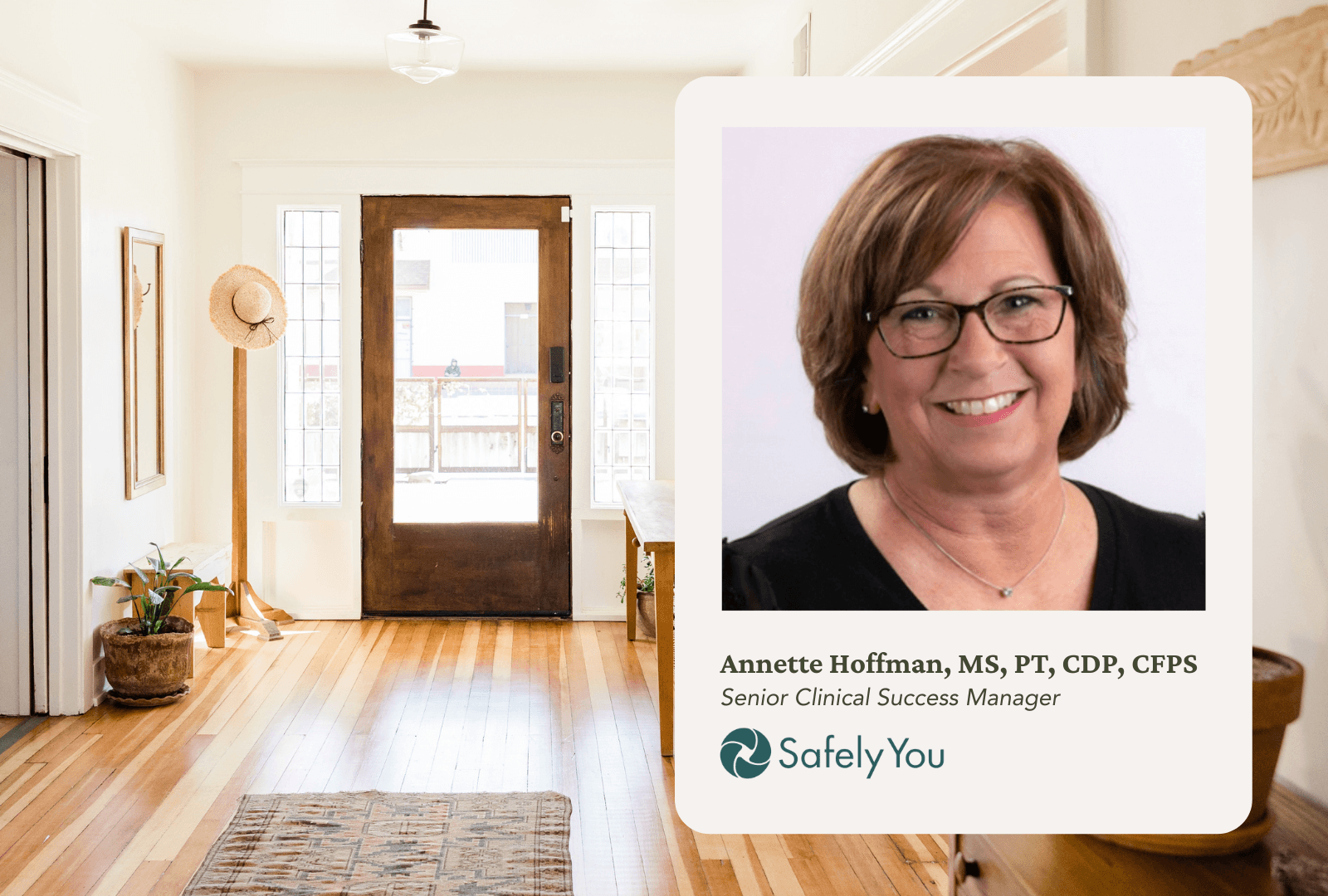
Guest Contributor: Annette Hoffman, MS, PT, CDP, CFPS, Senior Clinical Success Manager, SafelyYou
There is a quiet shift that comes with spring: longer days, brighter spaces, and a renewed awareness of how our environments affect the way we live. It’s often the small details we begin to notice first: a walkway that feels crowded, a room that could use better lighting, a daily routine that could be made just a bit easier.
For older adults, these subtle observations can lead to meaningful improvements. With a thoughtful approach, seasonal refreshes can go beyond aesthetics, supporting independence and reducing the risk of falls.
At Maplewood, this perspective is central to how environments are designed and refined. Spring becomes an opportunity not just to tidy, but to create spaces that feel supportive and aligned with overall well-being.
To guide this conversation, we are pleased to feature insights from Annette Hoffman, MS, PT, CDP, CFPS, Senior Clinical Success Manager at SafelyYou, whose work focuses on fall prevention and safety innovation in senior living environments. SafelyYou uses advanced AI technology to help detect falls, uncover patterns, and inform more proactive, personalized approaches to resident safety.
Spring cleaning is often associated with decluttering and organization, but for older adults, it also presents a critical opportunity to reassess the home environment through a safety lens.
“Addressing the environment is one of the simplest, most effective, and most cost-efficient ways to reduce fall risk.,” says Hoffman. “At SafelyYou, room redesign is the most frequently discussed intervention. By carefully evaluating furniture layout and the placement of key items in smaller spaces, it’s possible to promote easier movement and better use of mobility aids—ultimately helping to prevent falls.”
Falls remain one of the most significant risks to health and independence as we age. More than one in four adults age 65 and older experiences a fall each year, making falls the leading cause of injury in this population. Many of these incidents are preventable, often linked to environmental factors that can be easily addressed with a more mindful approach to home design and daily routines.
Small, strategic adjustments can significantly reduce fall risk while enhancing day-to-day ease and comfort.
“Decluttering the home environment is a key strategy in fall prevention. Eliminating trip hazards can significantly reduce the risk of falls. For individuals with mild cognitive impairment, too many items in the environment can also create challenges. Increased distractibility and divided attention may interfere with focusing on safe movement, raising the likelihood of a fall,” shares Hoffman who also recommends, “When organizing a space, prioritize items that are necessary, meaningful, and purposeful. A simplified, intentional environment supports both safety and independence.”
“Understanding fall risk is essential for maintaining personal safety and preventing injury. Falls that result in injury often lead to hospitalization and can contribute to a loss of independence,” says Hoffman. “By recognizing the factors that increase fall risk, and maintaining an open mindset toward implementing strategies to improve safety, individuals can take proactive steps to reduce that risk. Importantly, these efforts don’t limit independence; they help preserve it.”
At Maplewood, thoughtful environmental design is complemented by innovation. In select neighborhoods, technologies like SafelyYou support both fall prevention and response, offering insights that help teams better understand how and why falls occur.
Across our communities, data-driven approaches to fall prevention are making a measurable difference. On average, the median response time following a fall is 40 minutes, however, among residents utilizing SafelyYou, the ER send-out rate following a detected fall is 2.26%, with a median response time of just 2 minutes and 20 seconds ensuring timely support when it matters most. Deeper analysis also reveals that 45.5% of falls occur from a standing or walking position, while in 68.6% of cases, mobility aids were out of reach—critical insights that inform proactive interventions.
These insights allow care teams to continually refine environments, personalize support, and create spaces that are both safe and empowering.
Spring is a time to reset and restore. By approaching home environments with intention, families can create spaces that not only feel refreshed, but also foster greater confidence and peace of mind.
At Maplewood Senior Living, this philosophy is woven into every aspect of community life, from design and programming to care and innovation. Because well-being is not just about how a space looks, it’s about how it supports the people who call it home.
Interested in learning more about how Maplewood integrates safety, design, and innovation into everyday living? Explore our communities and discover how thoughtful details can make a meaningful difference.
Sign up to receive the latest posts straight to your inbox.
Keep Reading


