
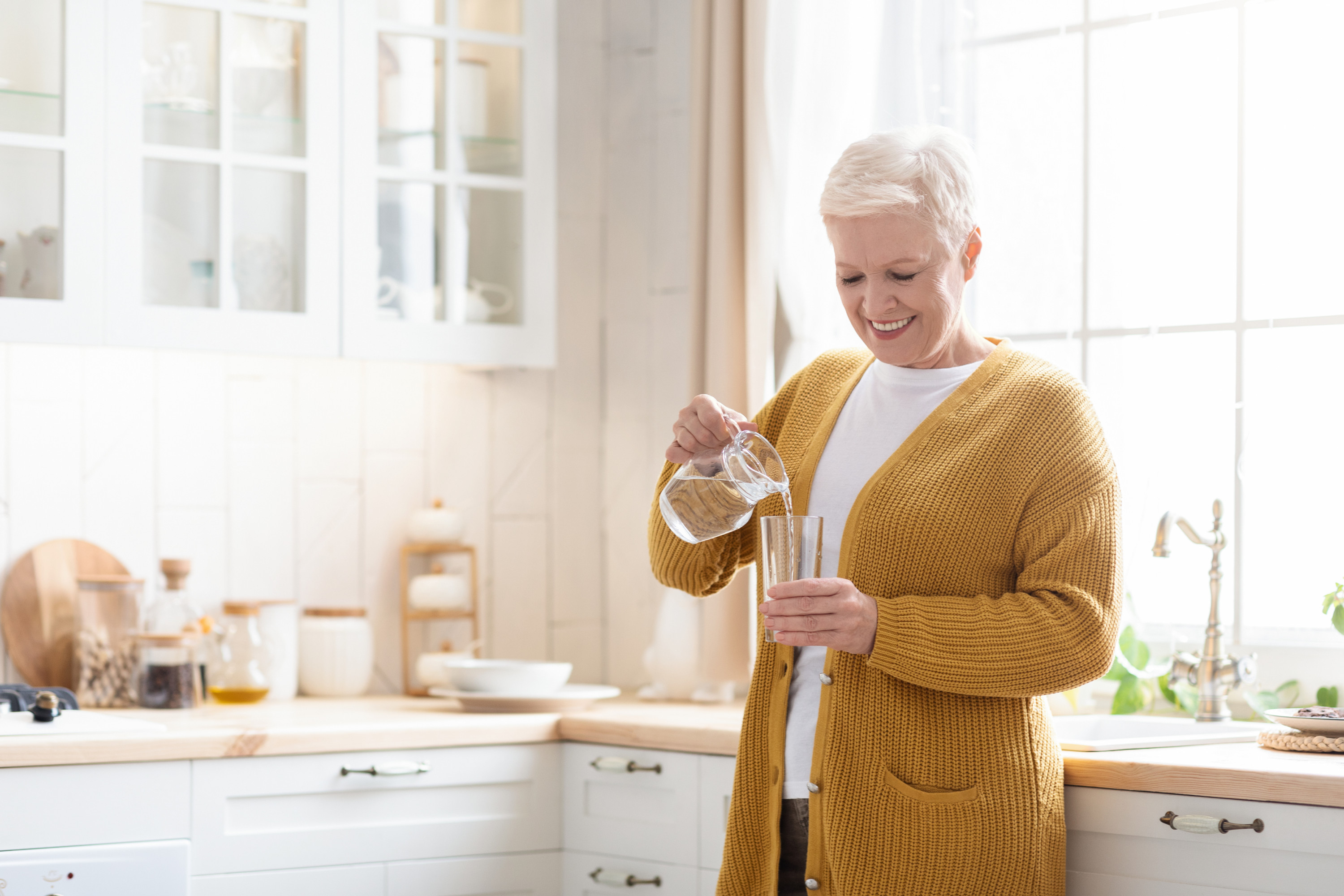
Summer often invites us outdoors a little longer. Morning walks feel lighter, fresh seasonal meals become more appealing, and time spent with family, neighbors, and friends naturally moves outside. But warmer temperatures also bring an important wellness reminder: hydration matters more than ever as we age.
While drinking enough water is essential at every stage of life, older adults face a greater risk of dehydration due to natural physiological changes, medications, and shifting thirst cues. During the summer months especially, hydration becomes closely tied not only to physical health, but also to cognitive wellness, energy, balance, and overall comfort.
At Maplewood, wellness is approached through the lens of whole-person living, recognizing that small daily habits often have the greatest impact on how people feel, connect, and thrive. Hydration is one of those foundational habits that supports both vitality and quality of life.
As the body ages, it naturally retains less water, and thirst cues can become less noticeable. Certain medications and health conditions may also increase the risk of dehydration, particularly during periods of summer heat and humidity.
What makes dehydration challenging is that it often develops gradually. Fatigue, headaches, dizziness, irritability, or difficulty concentrating may not immediately be linked to fluid intake, yet even mild dehydration can affect both the body and mind.
Researchers continue to study the relationship between hydration and cognitive wellness in older adults. A study published in the European Journal of Nutrition found meaningful associations between hydration status and cognitive performance, particularly in areas related to attention and processing speed.
In everyday life, that can translate into feeling more alert during conversation, more focused during creative programming, and more energized to participate in the activities and relationships that bring meaning to each day.
Hydration also supports many of the body’s essential systems. Water helps regulate temperature, lubricate joints, aid digestion, support circulation, and maintain energy levels.
For older adults, staying hydrated may help support:
A systematic review published in Archives of Gerontology and Geriatrics linked dehydration in older adults to increased health complications, including fatigue, cognitive strain, and elevated fall risk.
At Maplewood communities, hydration is supported in ways that feel natural and welcoming rather than clinical. Seasonal menus feature fresh fruits, vegetables, soups, and hydrating ingredients that make wellness both flavorful and enjoyable. Residents might enjoy infused water after a fitness class, fresh summer produce during lunch with friends, or a cool beverage while spending time outdoors with family.
The dining experience itself also plays an important role. Meals are designed to encourage connection, comfort, and nourishment, creating opportunities for residents to hydrate consistently throughout the day in social, inviting environments.
Often, the most sustainable wellness habits are the ones woven naturally into the rhythm of the day: A glass of water before a morning walk. Sparkling water shared during lunch with neighbors. Fresh watermelon after an exercise class. Pausing to cool down in a shaded courtyard after gardening or time outdoors.
Maplewood’s approach to wellness supports these small but meaningful routines through personalized care, attentive hospitality, and thoughtfully designed community spaces that encourage comfort and connection. Staff members understand that wellness is not one-size-fits-all, and subtle daily support can make a meaningful difference in how residents feel physically and cognitively.
That support extends beyond physical wellness alone. Summer programming often brings residents together through outdoor concerts, al fresco dining, gardening programs, walking groups, and social gatherings that encourage both engagement and well-being in ways that feel joyful and enriching.
Healthy aging is shaped by many small, meaningful choices repeated over time, such as nourishing meals, movement, conversation, rest, time outdoors, and connection to community. Hydration quietly supports all of it.
At Maplewood, we believe wellness should feel personal, enriching, and deeply human, supporting residents not only in the care they receive, but in how they experience each day with comfort and purpose.
To learn more about Maplewood’s thoughtful approach to wellness and community living, we invite you to schedule a tour and experience firsthand how our communities support vibrant, connected living all
Sign up to receive the latest posts straight to your inbox.
Keep Reading


