
Supporting brain health is not about finding one magic activity. Research continues to show that cognitive wellness is strongest when older adults engage in a combination of mental stimulation, physical movement, social connection, creativity, and purposeful routine. The National Institute on Aging notes that staying mentally, socially, and physically active may help support cognitive health as we age.
At Maplewood Senior Living, cognitive engagement is thoughtfully woven into daily life. Our programming is designed to be enjoyable and adaptable to each resident’s interests and abilities. Whether someone enjoys art, movement, lifelong learning, or conversation, the goal is the same: to keep the mind engaged while enhancing quality of life.
The brain benefits from a variety of opportunities, including those that present challenge, novelty, and consistency. Much like physical exercise supports strength and mobility, cognitive activity can help stimulate memory, attention, processing speed, and problem-solving. Studies also suggest that combining mental stimulation with physical activity may offer even greater benefits than either approach alone.
Equally important, engaging experiences can reduce isolation, elevate mood, and create opportunities for connection, all of which play an important role in healthy aging.
Learning does not stop with age. In fact, continuing to explore new ideas can help strengthen focus, curiosity, and adaptability.
Across Maplewood communities, residents may participate in guest lectures, current events discussions, book clubs, poetry groups, trivia challenges, and educational programs tied to travel, culture, wellness, or history. Technology classes that help residents use tablets, smartphones, or video calling platforms can also provide valuable mental stimulation while supporting connection with loved ones.
These experiences are about more than filling time. They reinforce that growth and discovery remain lifelong pursuits.
Music has a unique ability to activate multiple areas of the brain at once. Research suggests music-based interventions may improve memory, executive function, and mood in older adults, making music a valuable tool for cognitive wellness.
This is why music remains an important part of life at Maplewood. Live performances, sing-alongs, piano socials, themed concerts, and intergenerational musical events all create joyful opportunities for engagement. For many older adults, music becomes both meaningful entertainment and an effective cognitive support tool.
Creative activities encourage concentration, planning, fine motor coordination, and self-expression. They also provide a sense of accomplishment that can be especially valuable as people age.
Residents across our communities enjoy painting classes, watercolor sessions, floral arranging workshops, seasonal crafts, knitting circles, and guided art experiences such as reverse coloring. Because art is personal rather than performance-based, it allows individuals of many skill levels to participate comfortably and confidently.
Physical activity is closely linked to brain health. Studies continue to show that regular movement can support memory, executive function, and overall brain health, particularly when practiced consistently over time.
At Maplewood, wellness programming often combines physical activity with enjoyment and social connection. Residents may take part in chair yoga, balance classes, walking clubs, dance socials, stretch sessions, or movement programs inspired by Tai Chi. When exercise feels welcoming and engaging, participation becomes more natural and sustainable.
Conversation and social interaction require listening, recall, attention, and emotional awareness. In that sense, connection itself is a form of brain exercise. Meaningful social connection has been linked to better cognitive outcomes, while isolation is increasingly recognized as a risk factor for decline.
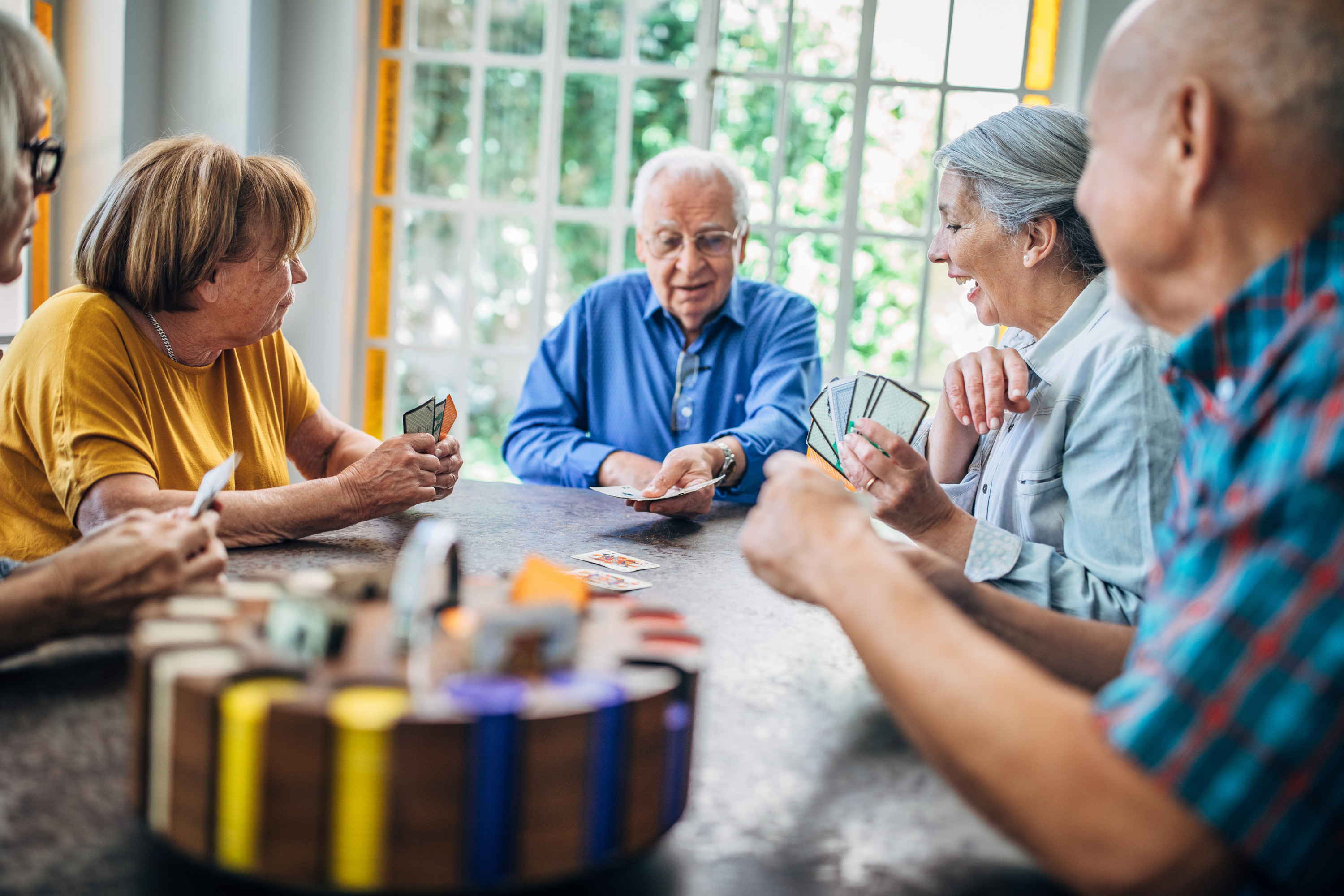
Shared dining, coffee socials, game groups, happy hours, resident councils, volunteer initiatives, and community outings all create opportunities for meaningful interaction. Visits to museums, gardens, restaurants, and local attractions also introduce novelty and shared experiences that stimulate conversation long after the outing ends.
Brain health is not only supported through games or classes. Purposeful daily routines can reinforce confidence, identity, and independence.
Residents often contribute in ways that feel familiar and meaningful, welcoming new neighbors, helping with gardening projects, participating in charitable drives, leading a discussion group, or mentoring peers. Feeling needed and connected to a larger community can have a powerful effect on emotional and cognitive wellness.
For those living with memory loss, engagement remains just as important, though the approach may be more individualized.
Maplewood’s specialized memory care neighborhoods offer thoughtfully adapted experiences such as reminiscence programs, sensory activities, personalized music, guided art, and small-group engagement designed to reduce frustration while encouraging success. The focus is not on performance, but on comfort, confidence, and meaningful moments of connection.
This personalized philosophy begins at the start of the day through our Early Riser Program, created for residents who naturally wake earlier in the morning. Residents are warmly greeted by care associates and welcomed into a calm, supportive setting with soft lighting and nutritious breakfast options. By honoring individual routines and creating a peaceful transition into the day, this approach can help reduce common stressors associated with cognitive impairment while promoting comfort, orientation, and a positive start to the morning.
Families can support cognitive wellness by encouraging participation, celebrating effort, and helping loved ones stay connected to lifelong interests. Bringing favorite music, photographs, conversation starters, or familiar hobbies can also create moments of joy and recognition.
Perhaps most importantly, families can choose a setting where engagement is already built into each day.
At Maplewood, cognitive engagement is not limited to one scheduled activity. It is reflected in how each day is designed: with intention, variety, warmth, and respect for the individual.
From lifelong learning and live music to art, movement, and meaningful social connection, our communities create opportunities for residents to remain curious, connected, and mentally active. To learn more about how Maplewood supports brain health through purposeful daily living, we invite you to connect with a community near you.
Sign up to receive the latest posts straight to your inbox.
Keep Reading


