
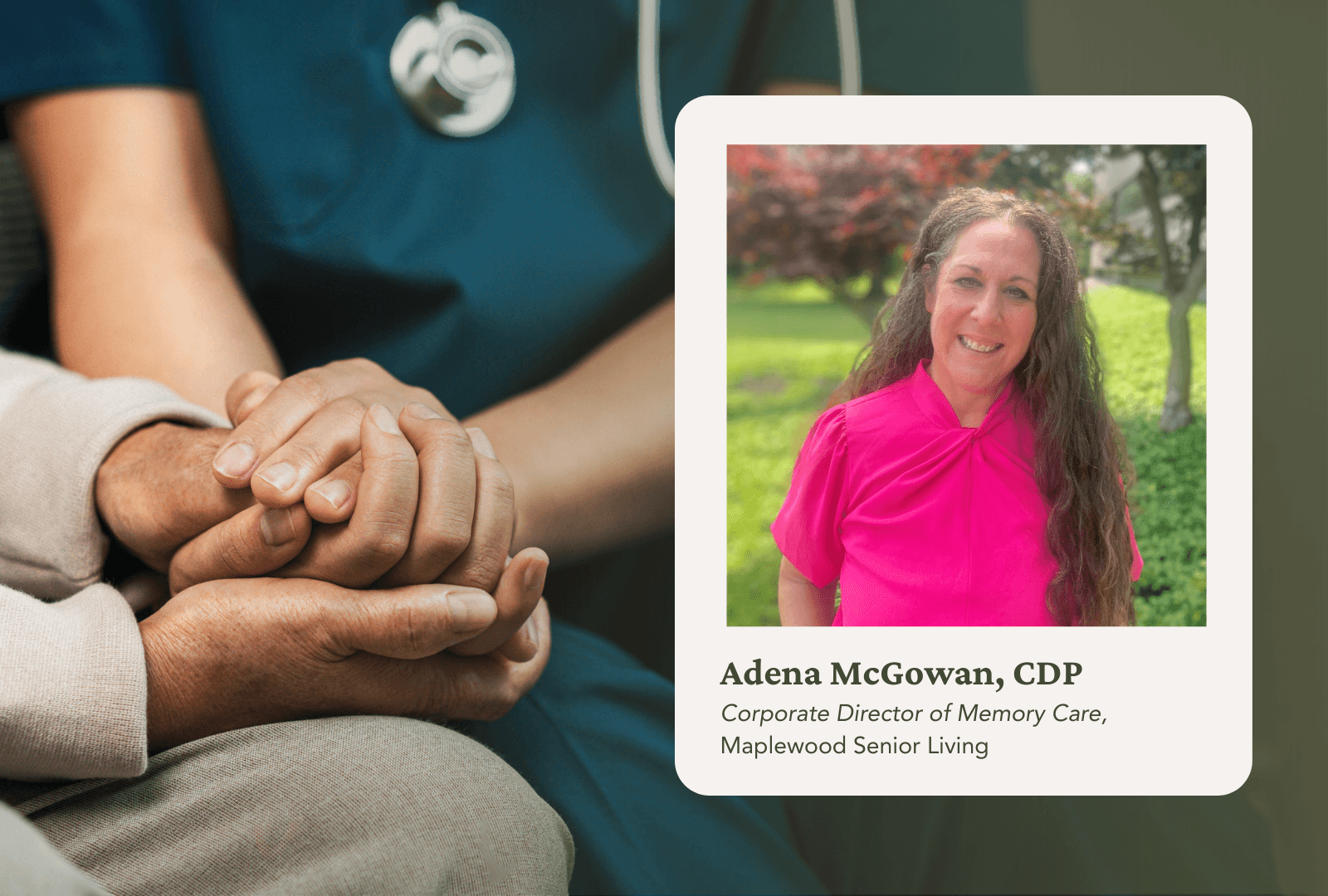
By: Adena McGowan, CDP, Corporate Director of Memory Care, Maplewood Senior Living
When families speak with me about dementia, the concern I hear most often is not medical, it is deeply human. “How do I still reach them?” “How do I know I’m helping instead of upsetting them?” “What do I say when the words we once shared no longer work?”
At Maplewood, we think about communication not as a skill to master, but as a relationship to nurture. Even when memory shifts, the desire to feel understood, respected, and emotionally safe remains very much intact. The way we speak, listen, and respond can either create calm or quietly increase distress. The good news is that families have far more influence than they often realize.
Dementia affects how the brain processes language, but it does not erase a person’s identity or emotional awareness. Your loved one may struggle to follow complex sentences, recall names, or track time, but they still recognize tone, body language, and the emotional intention behind what you say. Research consistently shows that when communication is supportive and person-centered, people living with dementia experience less anxiety and stronger emotional well-being.
That is why we place such emphasis on how interactions feel, not just what is being discussed.
Before a single word is spoken, the environment matters. Sitting close, reducing background noise, and making eye contact all help the brain focus. A gentle approach, such as saying their name, moving slowly, and speaking with warmth, signals safety.
We often encourage families to imagine that their loved one is processing the world through a narrower window. Too much stimulation or too many words at once can overwhelm that window. Simple, steady communication allows it to stay open.
Short sentences and one idea at a time are easier to understand. Instead of explaining several steps at once, guide your loved one gently through the moment. This keeps frustration from building on either side.
Choice remains important, even as dementia progresses. The key is to offer it in a way that feels manageable, such as “Would you like to wear this white shirt or the red shirt today?” while pointing to the options. Limiting choices supports autonomy while reducing the risk of confusion, and, when decision-making feels difficult, providing a kind, confident suggestion can be grounding rather than limiting.
This balance between independence and reassurance is at the heart of compassionate dementia care.
One of the most important shifts families can make is learning to respond to emotion rather than accuracy. When a loved one insists they need to go somewhere or do something that no longer fits reality, the feeling behind the statement, including worry, responsibility or longing, deserves attention.
Responding with empathy rather than correction keeps the conversation from turning into a struggle. Acknowledging their sense of purpose, fear, or attachments help them feel seen.
Repetition is common in dementia and is often driven by anxiety rather than forgetfulness alone. In these moments, reassurance is more helpful than explanation. A calm response, repeated consistently, combined with a soothing presence, can ease distress.
Gentle redirection can also be effective. Shifting attention to a familiar activity, a photograph, or a shared task allows the brain to settle without making someone feel dismissed.
Even subtle changes in phrasing can make a difference. Questions like “Do you remember?” can unintentionally create pressure. Invitations such as “I was thinking about…” or “Tell me what you see” are more welcoming and less demanding.
And when emotions run high, simplicity becomes your greatest ally. A few reassuring words, spoken slowly and kindly, can restore a sense of safety when logic cannot.
There is no single script for communicating with someone living with dementia. What matters most is staying present, patient, and open to the person behind the diagnosis. At Maplewood, we work closely with families to understand each individual’s history, preferences, and emotional needs, because communication is not one-size-fits-all.
Even when memory fades, connection remains. With thoughtful, compassionate communication, families can continue to share moments of understanding, comfort, and genuine closeness, long after words themselves begin to change.
Sign up to receive the latest posts straight to your inbox.
Keep Reading


